Skip to content

Sheet metal fabrication & smart equipment manufacturing · Qingxian, Hebei

Request a Quote WhatsApp +86 187 0117 2715
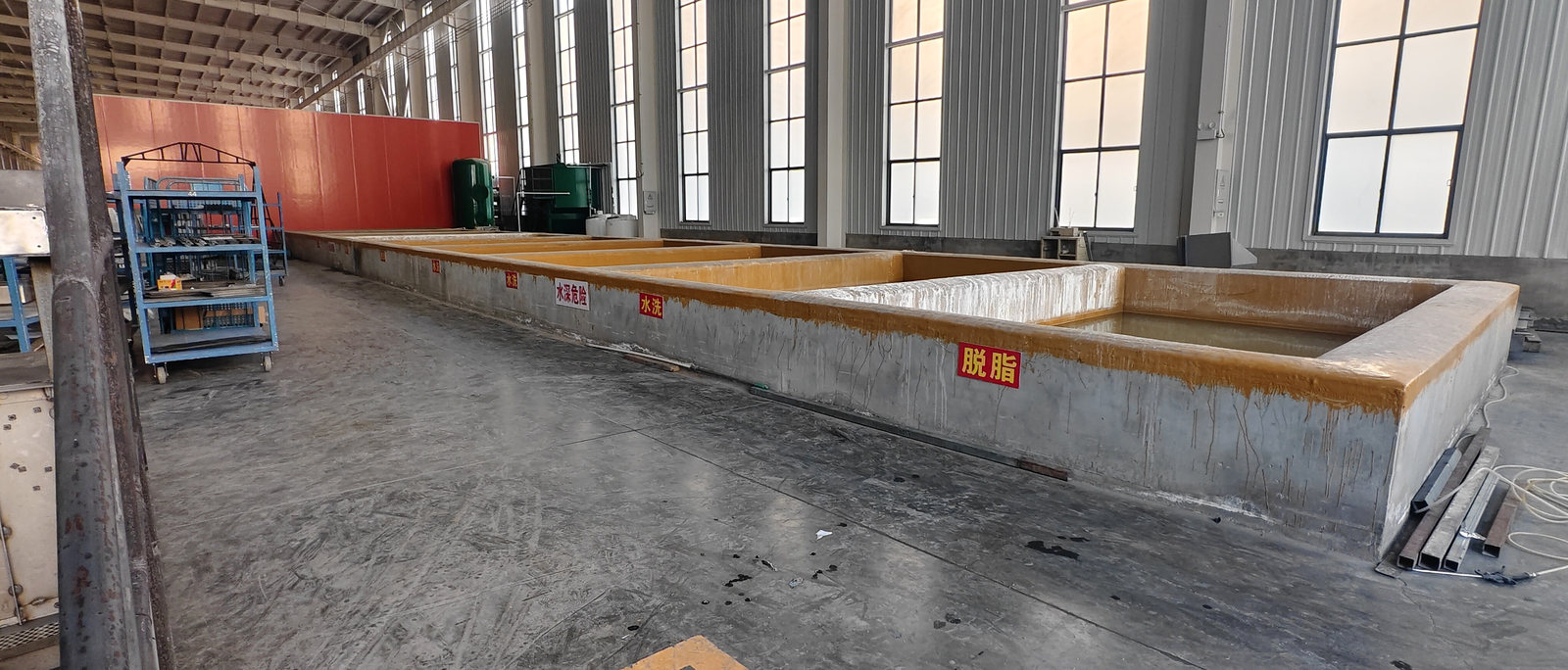
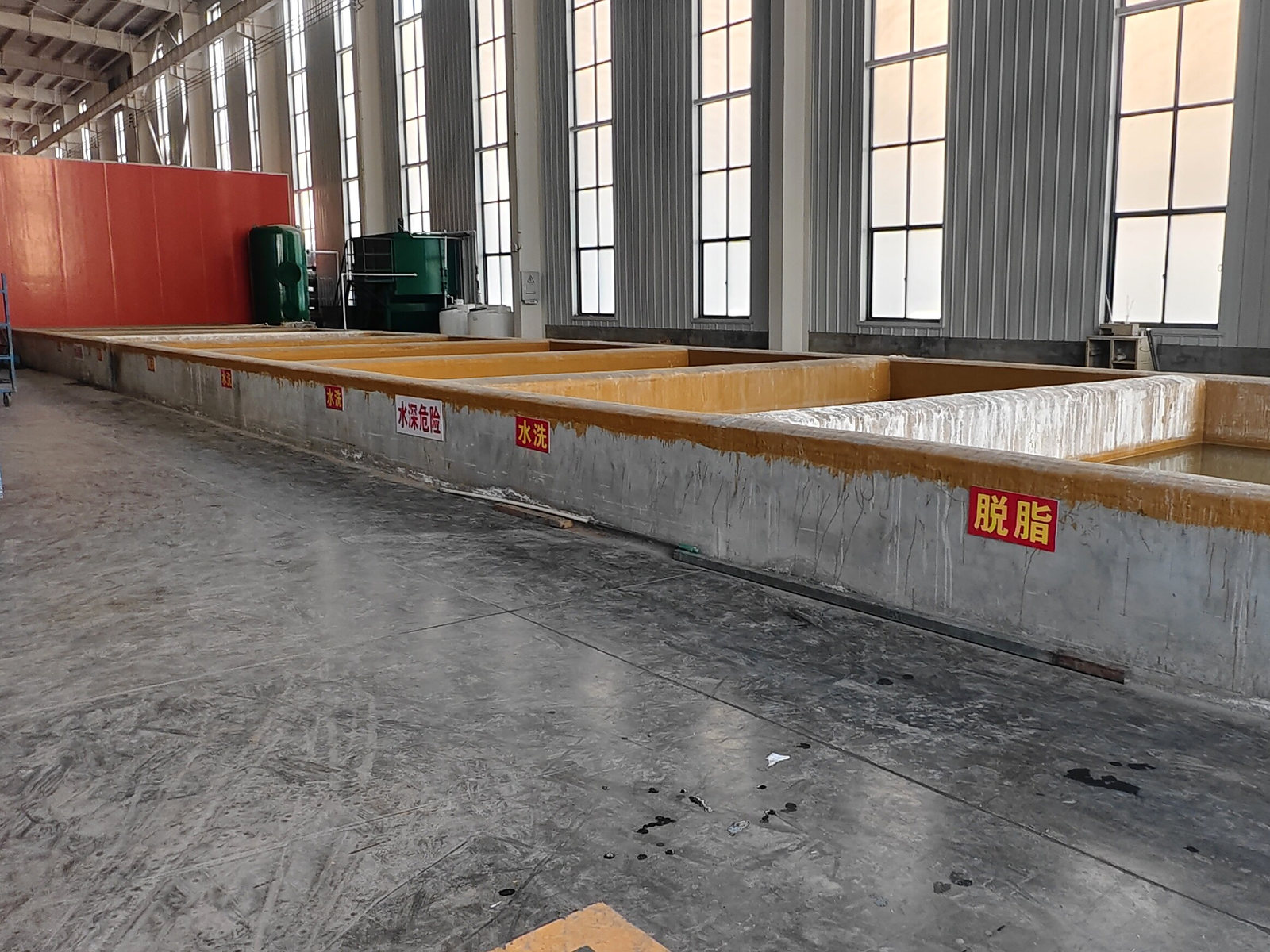
Immersion pretreatment line with degreasing and rinse tanks ahead of phosphating
Pretreatment · coating

Industrial Metal Surface Treatment

Phosphating, ceramic conversion, powder coating and large-scale spray booth capacity in one plant. Each process is described separately because each solves a different problem.

Why pretreatment matters

The coating only performs as well as the layer beneath it

Most coating failures start before the powder gun is switched on: oil left on the surface, an oxide layer that was never removed, or a part coated outside the window after pretreatment. Running pretreatment and coating in the same building means the interval between the two is controlled by the same team that made the part.

Phosphating and ceramic conversion are separate processes here, not alternatives hidden under a generic "surface treatment" heading. Phosphating is an immersion process in the tank line. Ceramic conversion is sprayed on the overhead conveyor of the coating line. They serve different substrates and different corrosion requirements, and they do not share one phosphating tank.

Immersion phosphating line with degreasing, rinse and phosphating tanks
Four processes · four sets of photographs

Phosphating, ceramic conversion, powder coating and large-booth capacity

Each process below has its own photographs and its own place in the route. The sequence is fixed at quotation, based on the substrate and the environment the part will live in.

Immersion phosphating tank line with degreasing, rinse and phosphating tanks
01

Phosphating

Immersion phosphating for steel: parts are degreased, rinsed, pickled and immersed in the phosphating tank to form a crystalline conversion layer that the powder coat bonds to. This is a tank process, not a spray-line process.

  • Substratecold-rolled and hot-rolled steel
  • Applicationimmersion in the phosphating tank line
  • Sequencedegrease → rinse → pickle → phosphate → passivate
  • Followed bypowder coating in the same plant
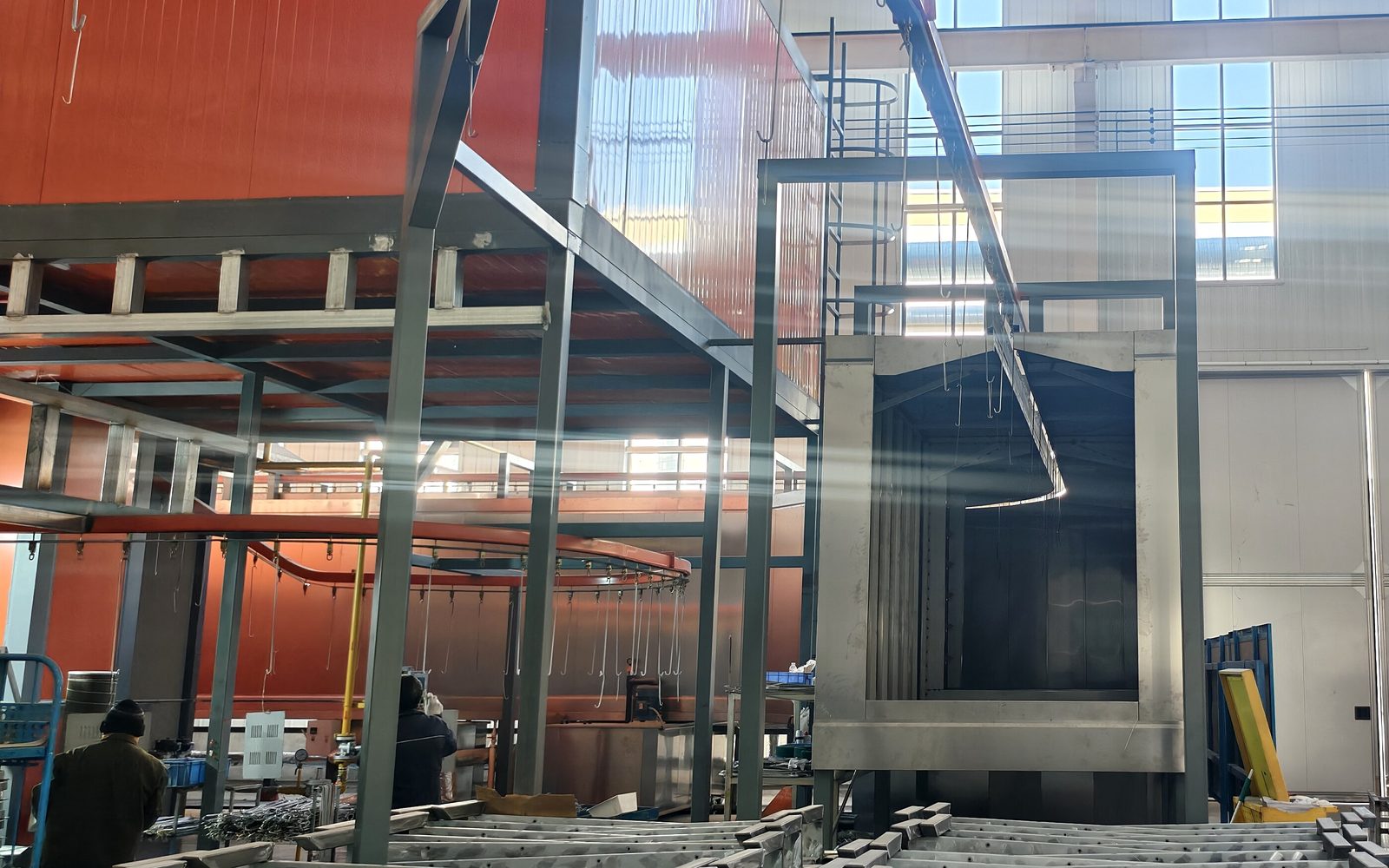
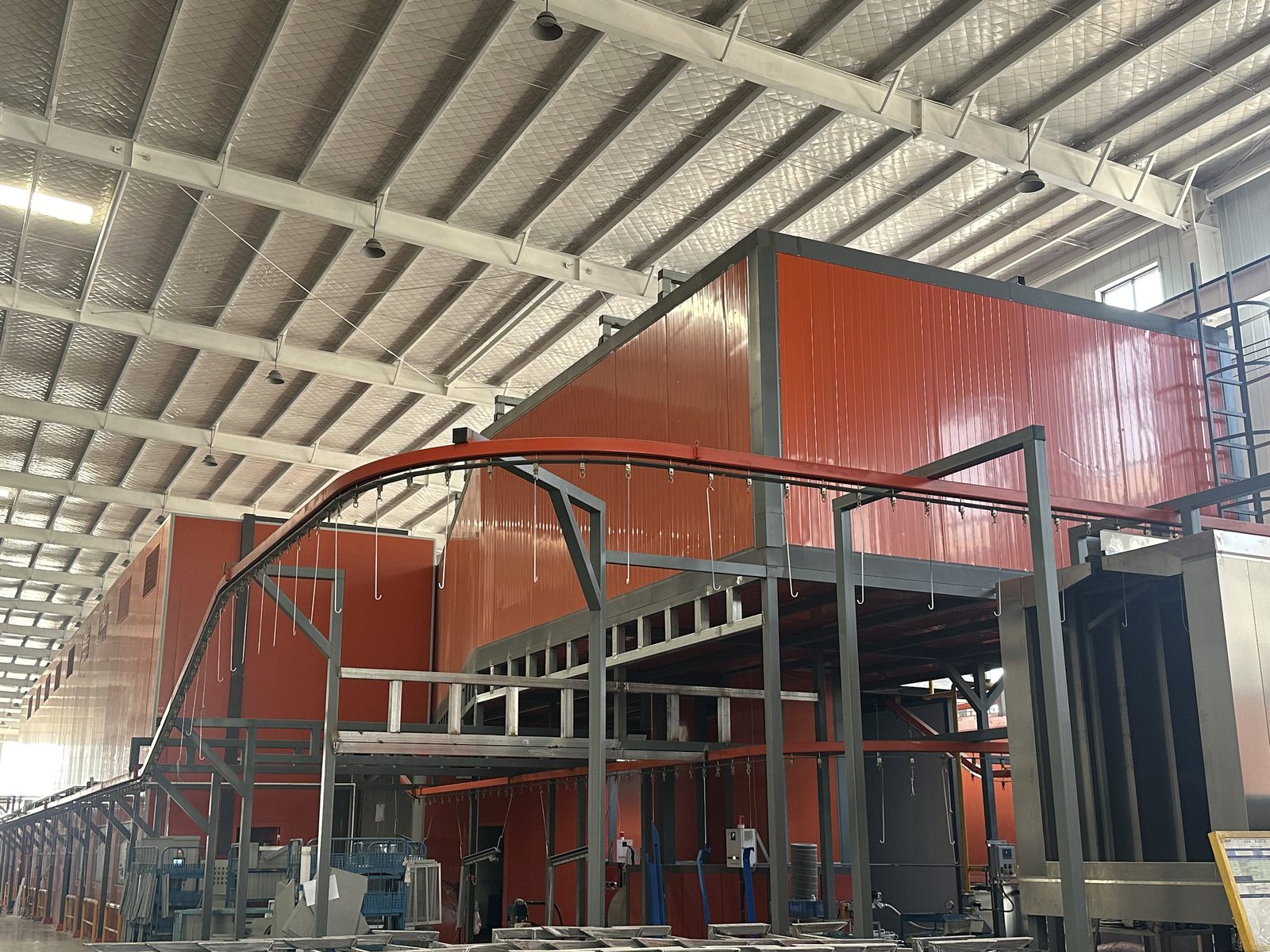
Overhead conveyor entering the ceramic conversion spray section of the coating line
02

Ceramic Conversion Coating

A zirconium/titanium-based conversion layer for steel, galvanised steel and aluminium, applied by spray on the overhead conveyor of the coating line. It avoids the heavy-metal phosphate step and suits mixed-material batches.

  • Substratesteel, galvanised steel, aluminium
  • Applicationspray on the coating-line conveyor
  • Routeseparate from the phosphating tank line
  • Followed bypowder coating in the same plant
Automatic powder coating line with parts on the conveyor
03

Powder Coating

Electrostatic powder applied in three automatic lines and cured in an in-line oven. Colour is matched to RAL or to a customer sample, and the film is checked before dispatch.

  • Linesthree automatic lines with an in-line curing oven
  • ColourRAL or customer sample
  • Checkscolour, gloss, hardness, thickness, adhesion
  • Also availablephosphating or ceramic base
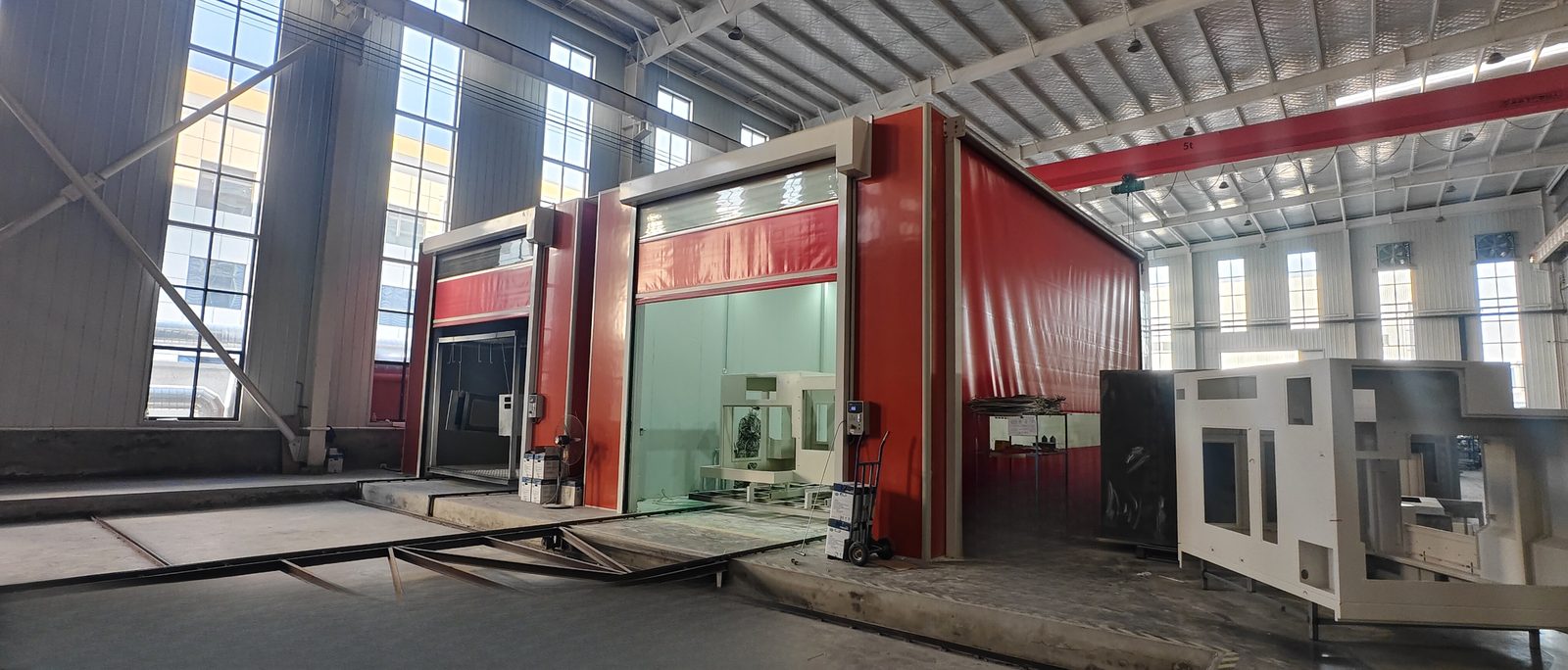
Two large powder spray booth openings served by a 5 t overhead crane
04

Large-scale Spray Booth

Two large spray-booth openings handle cabinets, frames and enclosure panels that are awkward in a compact booth. The bay is served by the plant's 5 t overhead crane and sits in the same coating area as pretreatment and curing.

  • Worklarge cabinets, frames and enclosures
  • Handling5 t overhead crane
  • Boothlarge-format spray capacity
  • Envelopeconfirmed against each drawing
Process continuity

Pretreatment to coating without leaving the building

Phosphated parts move from the tank jigs to the powder booth; ceramic-treated parts continue on the coating-line conveyor. Both routes stay inside the same building, so the interval between pretreatment and coating is controlled by one team.

Coating line with overhead conveyor, booth structures and parts on jigs
Curing oven of the powder coating line

Line layout

Pretreatment section, powder booth and curing oven sit in one line, so a part is not stacked, wrapped or trucked between steps.

Colour control

Colour is matched to RAL or to a customer sample. A first-off panel is compared before the batch is released.

Finish checks

Colour, gloss, hardness, coating thickness and adhesion are checked with BYK and Fischer instruments before dispatch.

Parameters. Film thickness ranges, salt-spray hours and adhesion grades depend on the specification agreed for each project. We do not publish a single number as a universal promise, and the quotation states the standard the part will be checked against.

Large-scale spray booth

Spray capacity sized for cabinets and frames

The coating area has large booth openings for cabinet shells, welded frames and enclosure panels that are awkward to handle in a compact booth. The bay is served by a 5 t overhead crane and sits on the same route as pretreatment and curing.

External view of the large powder spray booth structure and extraction ducting, with the 5 t overhead crane above

External view of the large spray-booth structure and extraction ducting, with the 5 t crane beam above.

Work handled

Cabinet shells, welded frames and enclosure panels that are awkward in a compact booth.

5 t overhead crane

The booth bay is served by the plant's 5 t crane for heavy cabinet and frame handling.

Coating route

Powder coating over phosphating or ceramic conversion, on the same pretreatment-to-cure route.

Work envelope

Confirmed against the drawing before quotation; no unmeasured size is promised on this page.

When to choose which

Substrate decides the pretreatment

The substrate and the service environment decide the route. The table opposite is the starting point we use at quotation; the final sequence is written on the drawing and confirmed before the first batch.

Send a drawing for quotation
  • Cold-rolled steelPhosphating is the usual base for cabinets and enclosures.
  • Hot-rolled / heavy steelPhosphating after mechanical descaling, where the surface allows.
  • Galvanised steelCeramic conversion, to avoid the zinc reaction in a phosphate bath.
  • AluminiumCeramic conversion, with the alloy and temper stated on the drawing.
  • Mixed batchesCeramic conversion, because one line can take steel, galvanised and aluminium.
  • Bare or oiled partsNo pretreatment; the route stops at grinding and packing.

Ask About Surface Treatment

Fields marked * are required. Tell us the part, the material and the quantity. A drawing is optional at this stage.

PDF, DXF, DWG, STEP, STP, JPG or PNG. One file, max 20 MB. Larger sets: email them after submitting.

Ready to discuss your project?

Send a drawing, a specification or just your requirement. We confirm the process route and reply within one business day.

WhatsApp