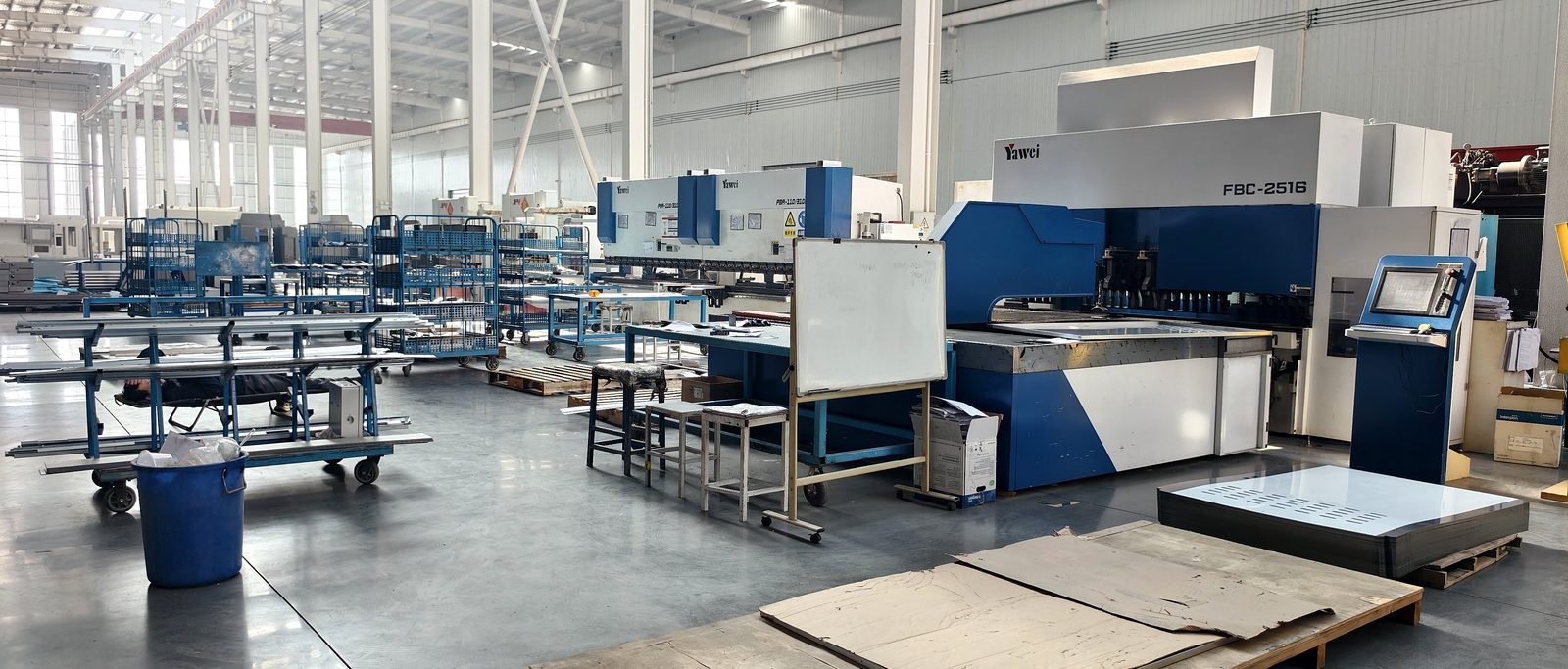
Sheet Metal Fabrication
Laser cutting, punching, bending, riveting, welding, grinding, phosphating or ceramic conversion, powder coating, assembly and inspection — one route, one quality record, one supplier for the whole part.
Custom sheet metal parts, engineered for the next process
A sheet metal part is only as good as the step that follows it. Cutting has to leave an edge the brake can form, forming has to leave a surface the coating can hold, and the assembly has to fit a cabinet that was welded two stations earlier. Our route is planned as one sequence rather than twelve separate services.
We work from a drawing, a STEP model, a sample or a specification. If a feature cannot be made repeatably, we say so at quotation stage instead of discovering it in the first batch.
| Process | Equipment in place | Checked at |
|---|---|---|
| Engineering drawing review | 2D drawing, 3D model or sample | DFM, tolerance and finish review |
| Laser cutting | 3 fiber lasers, max 4 m sheet | First-piece check, edge/dross |
| CNC punching | 2 CNC turret presses, 3 conventional presses | First part against drawing |
| CNC bending | 21 press brakes and bending cells | Angle and flange height |
| Riveting & hardware | 9 press riveters, tapping group | Position and torque |
| Welding | 36 TIG, 40 MIG, 2 robot cells, 27 stations | Weld size and appearance |
| Grinding & polishing | 1 grinding machine, bench finishing | Surface before pretreatment |
| Surface pretreatment | Phosphating tanks; ceramic spray line | Process selection per substrate |
| Powder coating | 3 automatic lines + large spray booths | Colour, gloss, thickness, adhesion |
| Assembly | Wiring and assembly bays | Door alignment, torque, routing |
| Quality inspection | 14 instruments, 8 dispatch checks | Record against order |
| Packing & delivery | Packing method per order | Labels, quantity, documents |
Twelve steps in the order they happen
Each step below is a section with a process image, the machine count and what the step does for your part.

Drawing and DFM review before the drawing is released to production
Engineering Drawing Review
Every order starts with the drawing, not the machine.
Customer drawings, STEP models or samples are checked for material, thickness, tolerances, bend radii, hardware and finish before a price is issued. Features that cannot be produced repeatably are flagged at quotation, and the approved drawing becomes the inspection reference for the run.
- 2D PDF / DWG / DXF or 3D STEP
- Material, thickness and finish confirmed
- DFM issues flagged before quotation
- Approved drawing becomes inspection reference
Value to your part. A quotation and process route built on a reviewed drawing, so surprises are handled before the first cut.
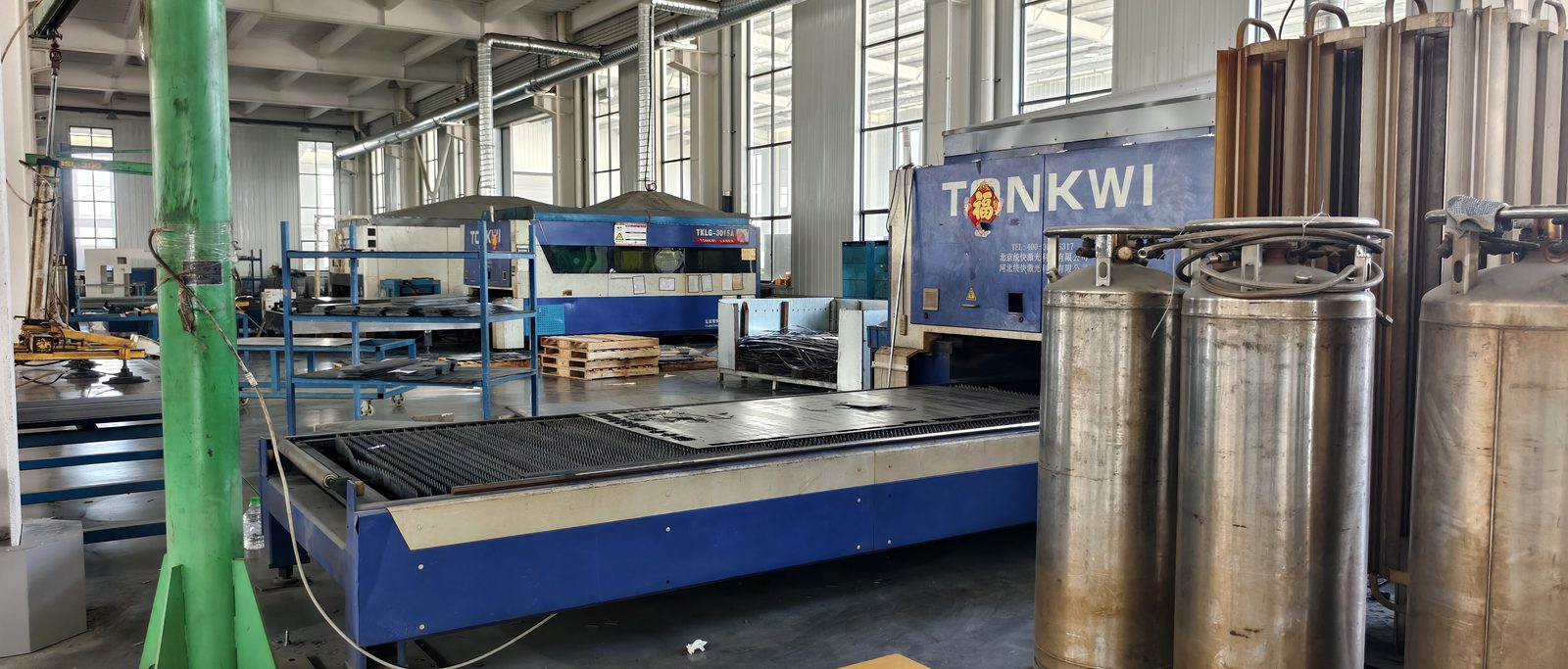
Fiber laser cutting, max 4 m sheet format
Laser Cutting
The route starts with a nested blank cut on one of three fiber lasers, so every downstream operation works from the same edge condition.
Programs are nested to the sheet, the first part is checked against the drawing, and the cut edge is inspected for dross before the nest is released. Maximum sheet format is 4 m, which covers full cabinet and locker panels without a splice.
- 3 fiber laser cutting machines
- Max sheet format 4 m
- Nested programs, first-piece check
- Edge condition checked before forming
Value to your part. A clean, repeatable blank with the edge condition the brake and the coater need — no secondary trimming.
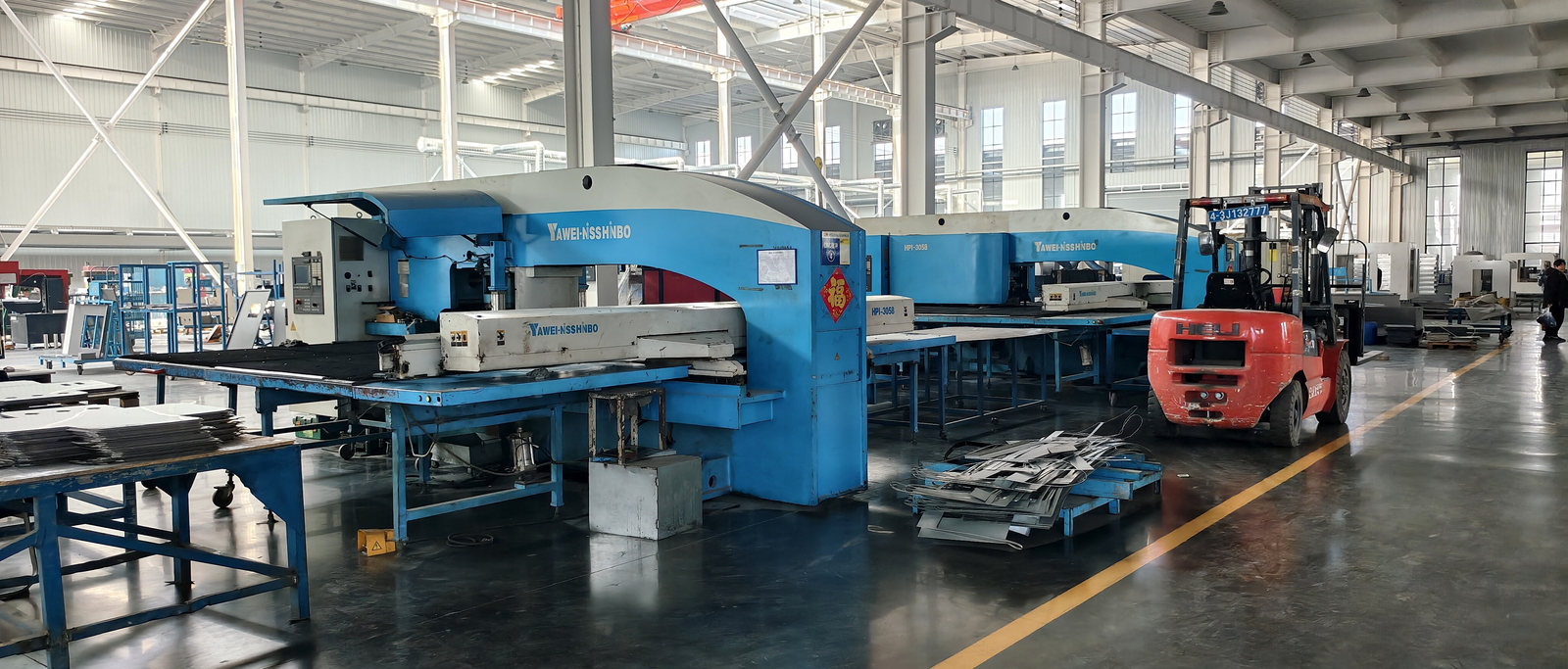
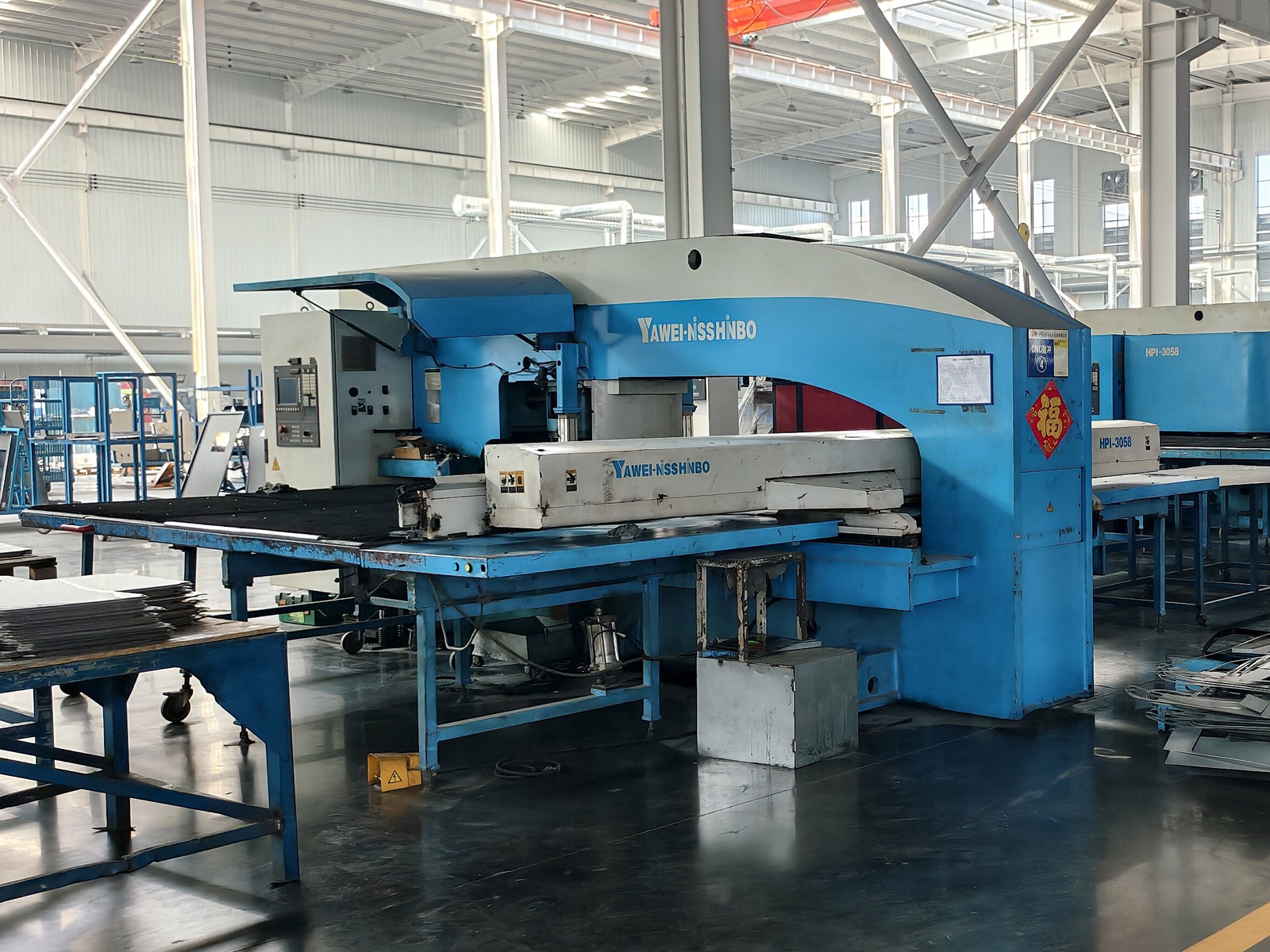
CNC punching at the turret press
CNC Punching
Repeated openings, vents and mounting plates are punched rather than cut one by one, which keeps the cost of a production batch down.
Two CNC turret presses run the programmed patterns, with conventional presses handling smaller repeat forms. Tooling is checked on the first part; the turret program stays with the part number for repeat orders.
- 2 CNC turret punch presses
- 3 conventional presses
- Turret tooling set per part number
- First part checked against drawing
Value to your part. Lower cost per opening on production batches, and vent patterns that stay identical order after order.
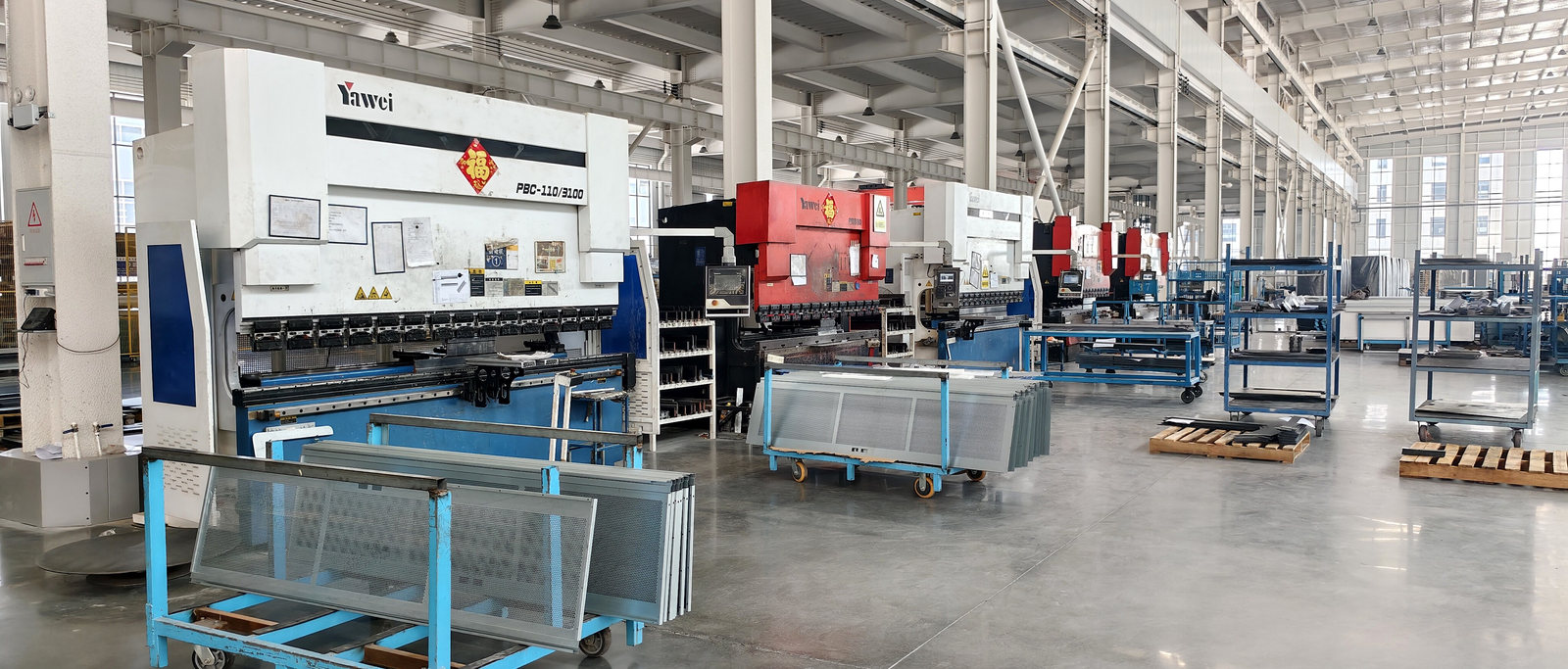
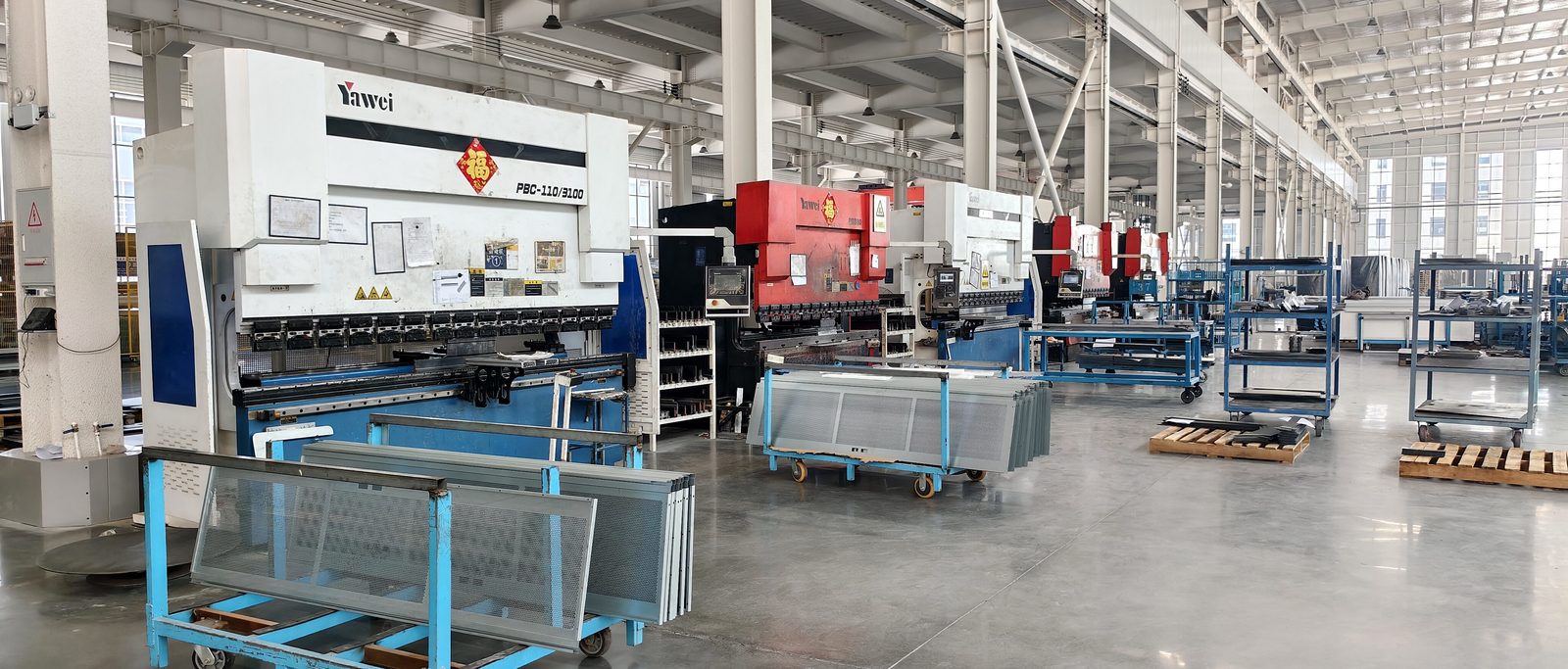
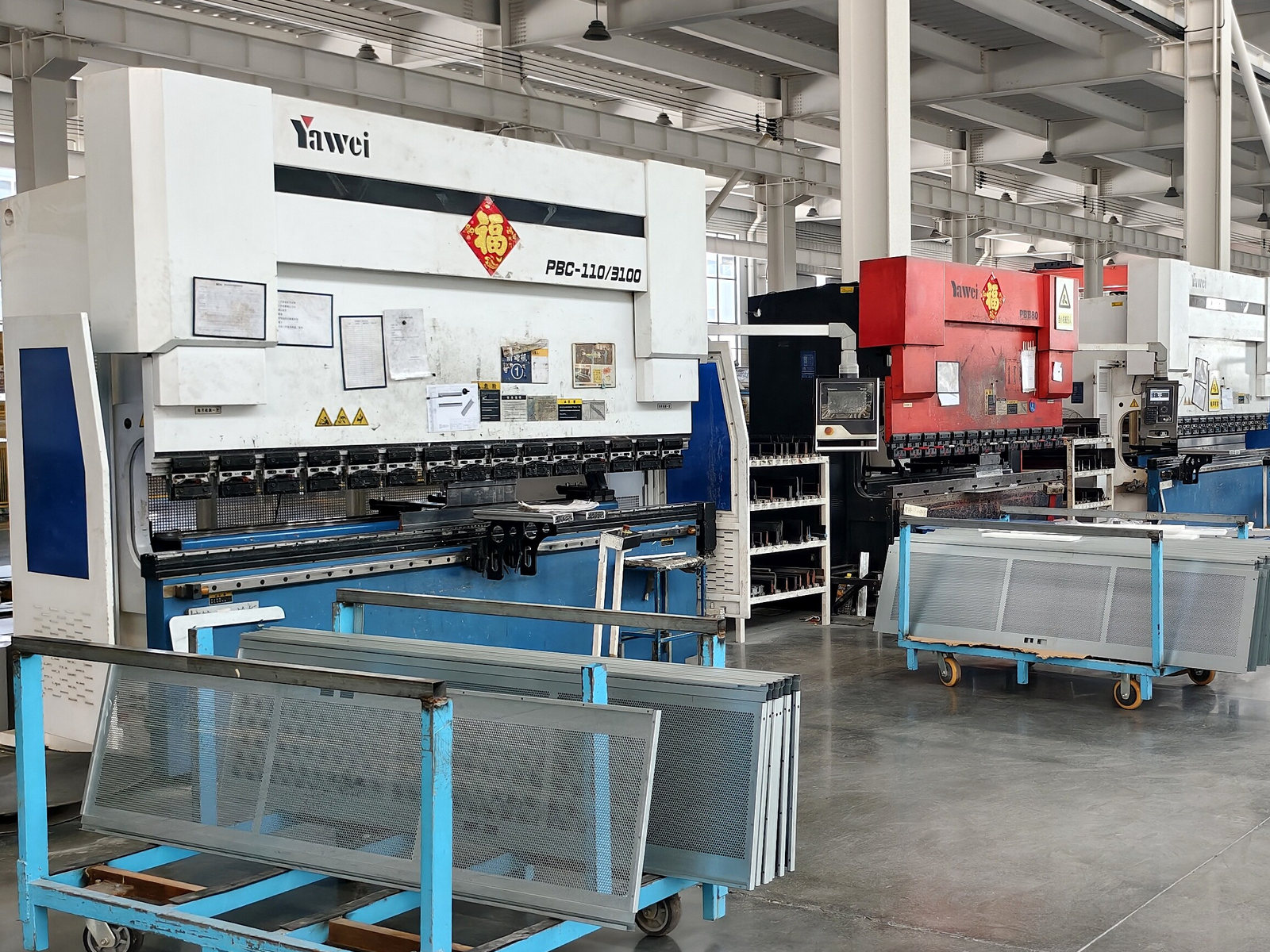
21 press brakes and bending cells
CNC Bending
Forming is where a part either fits the next operation or becomes scrap. The bending area is sized to keep that risk low.
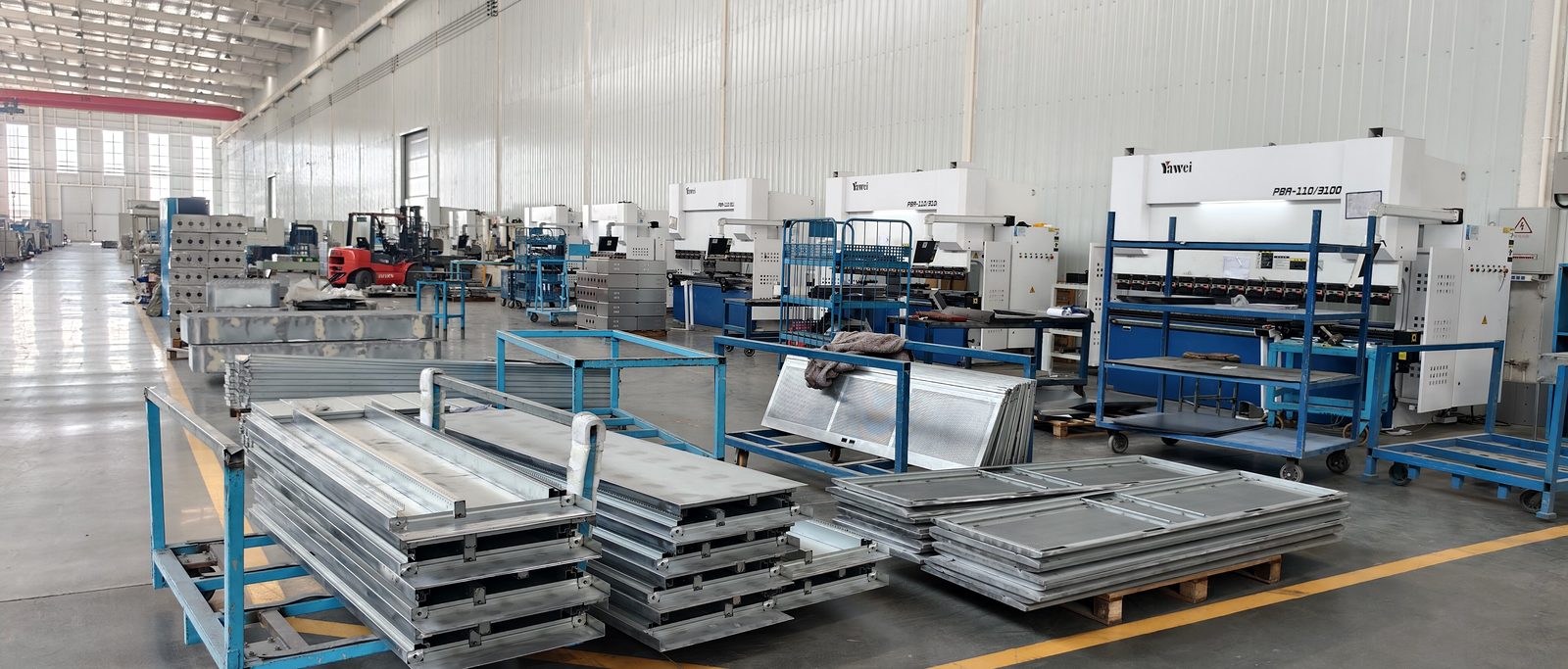
The plant runs 21 press brakes and bending cells, including a robotic bending cell for repeat work and a two-machine linked brake for long parts. Bend programs are stored per part, and the first article is checked for angle and flange height before the batch continues.
- 21 press brakes and bending cells
- Robotic bending cell PBC110/3100FMC
- Two-machine linked brake 2-PBA-110/3100
- Angles and flange heights checked on first article
Value to your part. Bends that fit the next fixture the first time, so cabinet doors and panels line up on site.

Press riveting and hardware insertion before pretreatment
Riveting & Hardware Insertion
Hinges, studs, inserts and earth points are placed before coating, so the finished cabinet does not need to be opened up again.
Nine press riveters and the tapping group handle clinch nuts, studs, thread inserts and earth tags. Insert positions are checked against the drawing after the first part, and torque is verified on the hardware that carries load.
- 9 press riveters (H518 / 818)
- Tapping and drilling group
- Inserts placed before pretreatment
- Torque checked on load-bearing hardware
Value to your part. Hardware fixed before coating, so the finish stays intact and the unit does not need rework after paint.
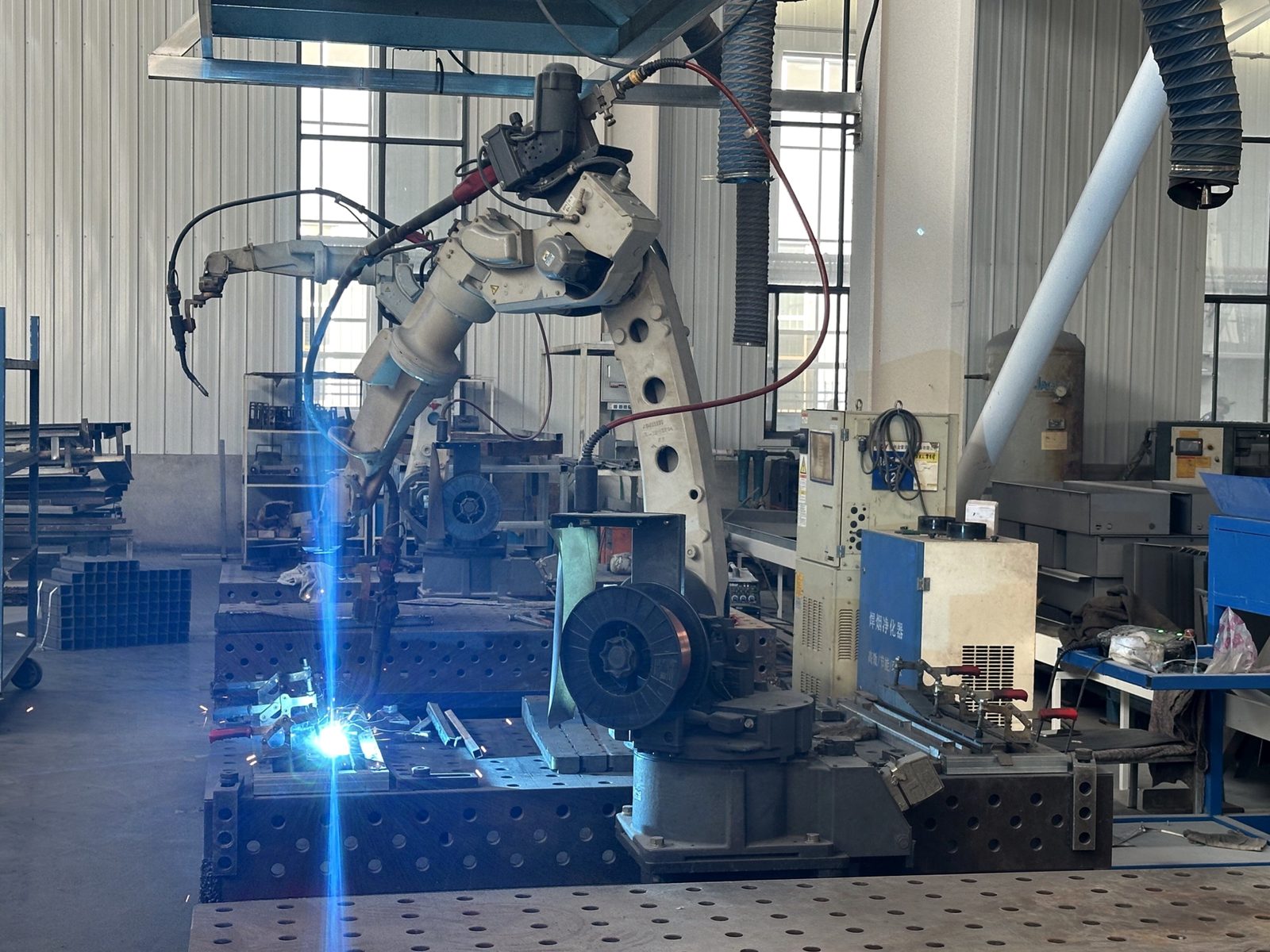
Robotic welding cell working on a steel frame
Welding
Frames, brackets and heavy assemblies are welded in-house, which keeps the tolerance chain inside one team.
The welding area runs 36 TIG sets, 40 MIG sets, 27 stations, four hand-held laser welders and two Panasonic robot cells. Robot programs are proven on the first frame; distortion is controlled with fixtures and sequence, and weld appearance is checked before grinding.
- 36 TIG / 40 MIG welding sets
- 2 Panasonic robot welding cells
- 27 welding stations
- 4 hand-held laser welders
Value to your part. A frame that holds its shape through coating and assembly, with the tolerance chain owned by one team.
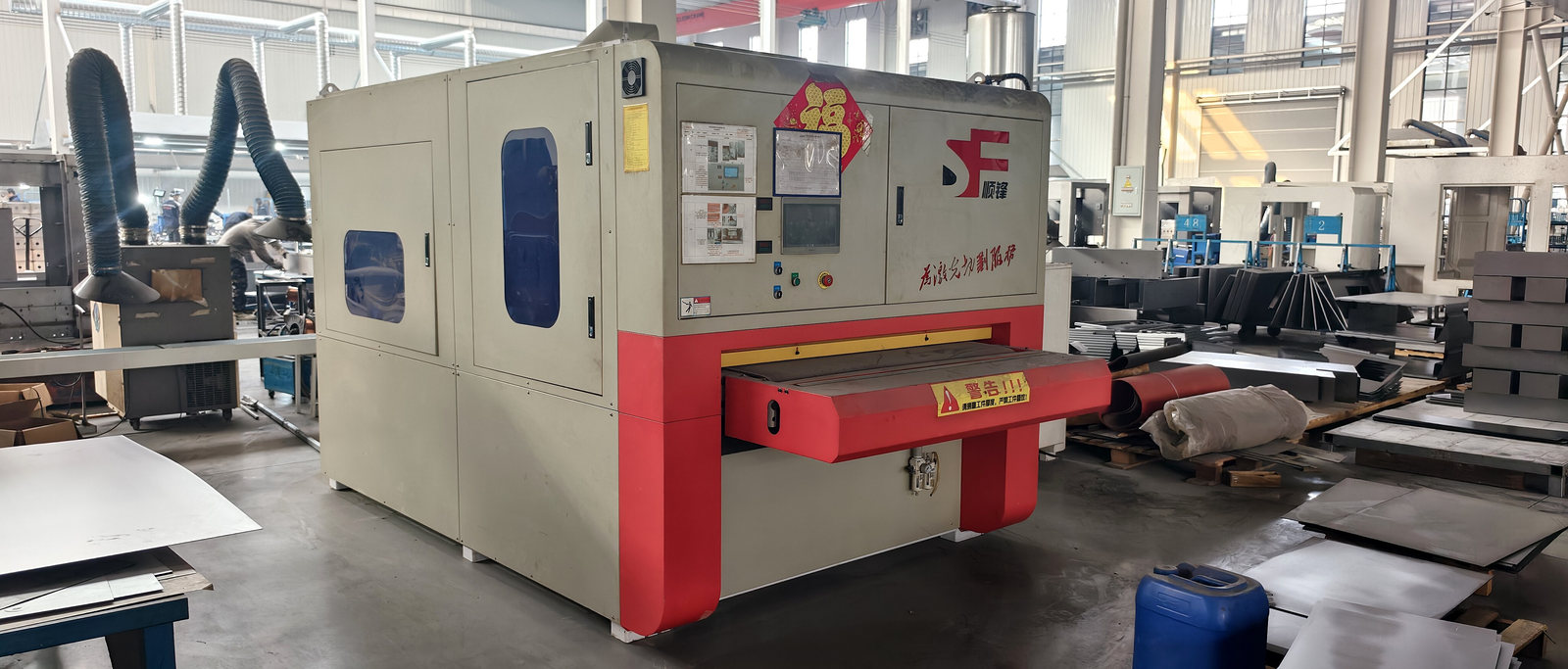
Grinding and deburring before pretreatment
Grinding & Polishing
A coated part only looks right if the surface underneath is right, so weld seams and edges are dressed before pretreatment.
Weld seams are ground back, edges are deburred and the surface is prepared for the pretreatment line. The plant runs a dedicated grinding machine plus bench finishing; parts that will be coated are handled separately from bare-metal work to avoid cross-contamination.
- Grinding machine SSD1300
- Weld seams dressed before coating
- Edges deburred on coated parts
- Bare-metal and coated routes kept apart
Value to your part. A surface that takes powder evenly, with welds dressed so the coating does not telegraph the seam.
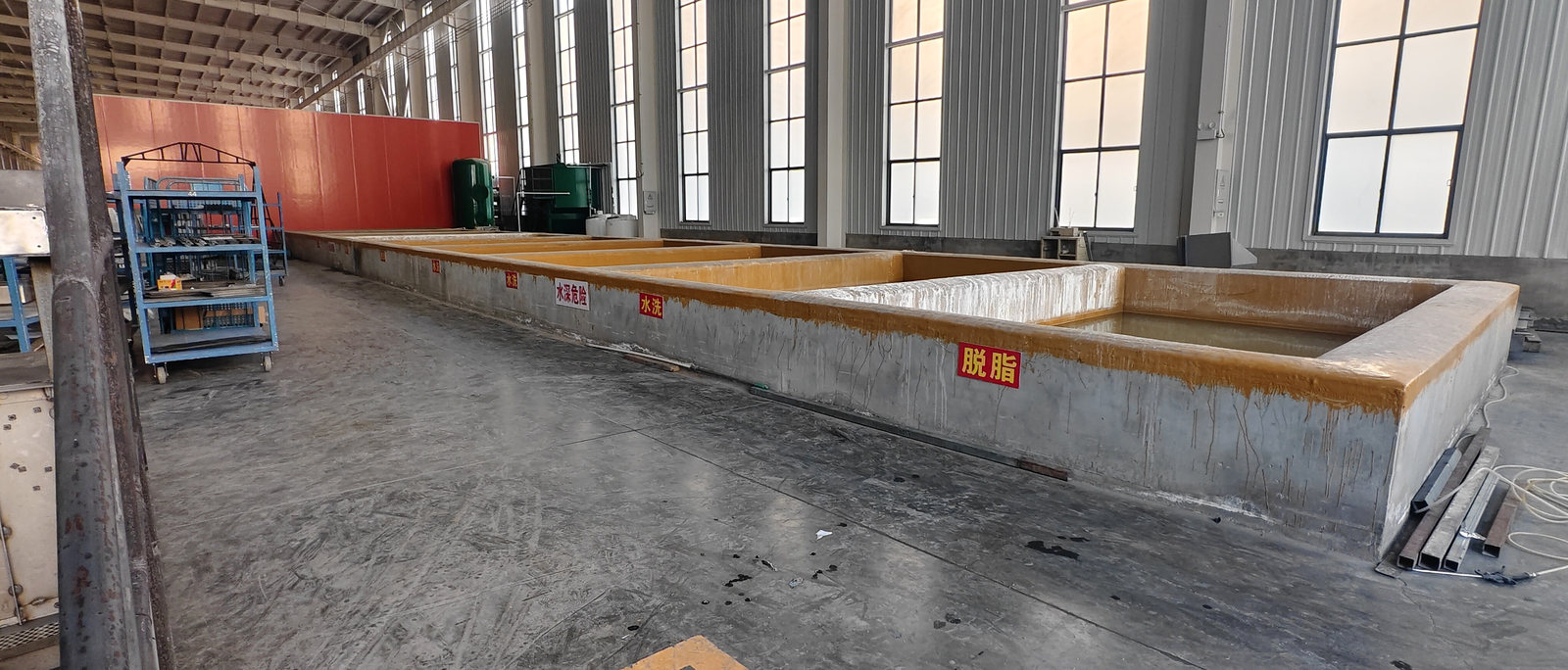
Phosphating tanks: degreasing, rinsing and immersion phosphating
Surface Pretreatment
Phosphating is an immersion tank process; ceramic conversion is sprayed on the coating line. They are separate routes, not two names for one tank.
Phosphating is used for steel parts and runs through a tank line: degreasing, rinse, pickle, phosphating and passivation. Ceramic conversion is applied by spray on the overhead conveyor of the coating line and is used for mixed steel, galvanised and aluminium batches. The route is fixed at quotation, not at the tank.
- Phosphating: immersion tank line
- Ceramic conversion: spray on coating line
- Process chosen per substrate
- Both feed the powder coating area
Value to your part. Adhesion and corrosion performance chosen per substrate instead of one generic dip for everything.
Read the surface treatment page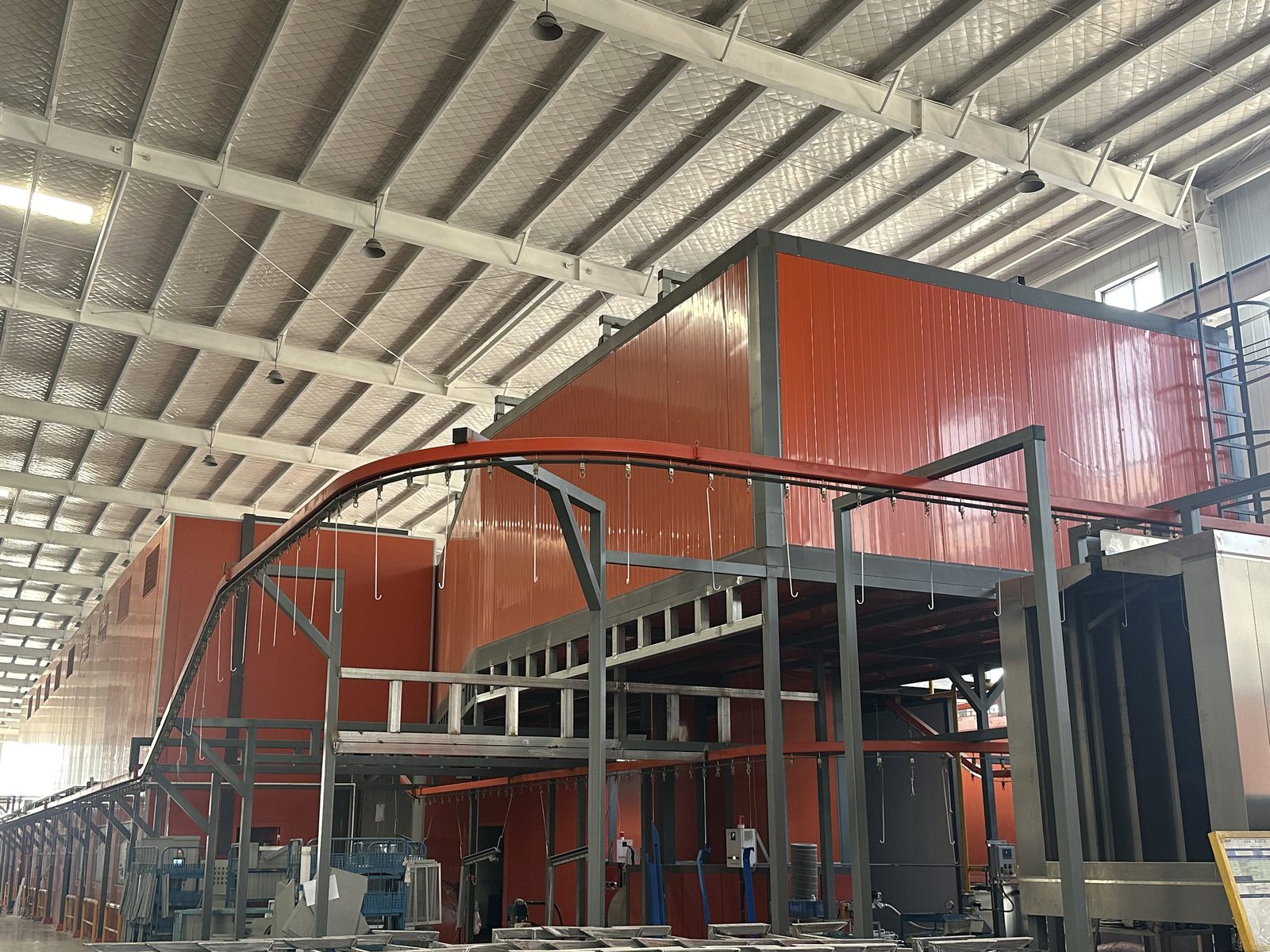
Three automatic powder coating lines
Powder Coating
Three automatic lines and an in-line curing oven mean the interval between pretreatment and coating stays under one roof.
Powder is applied electrostatically, cured in the oven and checked for colour, gloss, hardness, thickness and adhesion. Colour is matched to RAL or to a customer sample; a first-off panel is compared before the batch is released.
- 3 automatic powder coating lines
- In-line curing oven
- RAL or customer sample colour
- BYK and Fischer checks before dispatch
Value to your part. A finish that matches the approved sample and survives handling, with the checks recorded per batch.
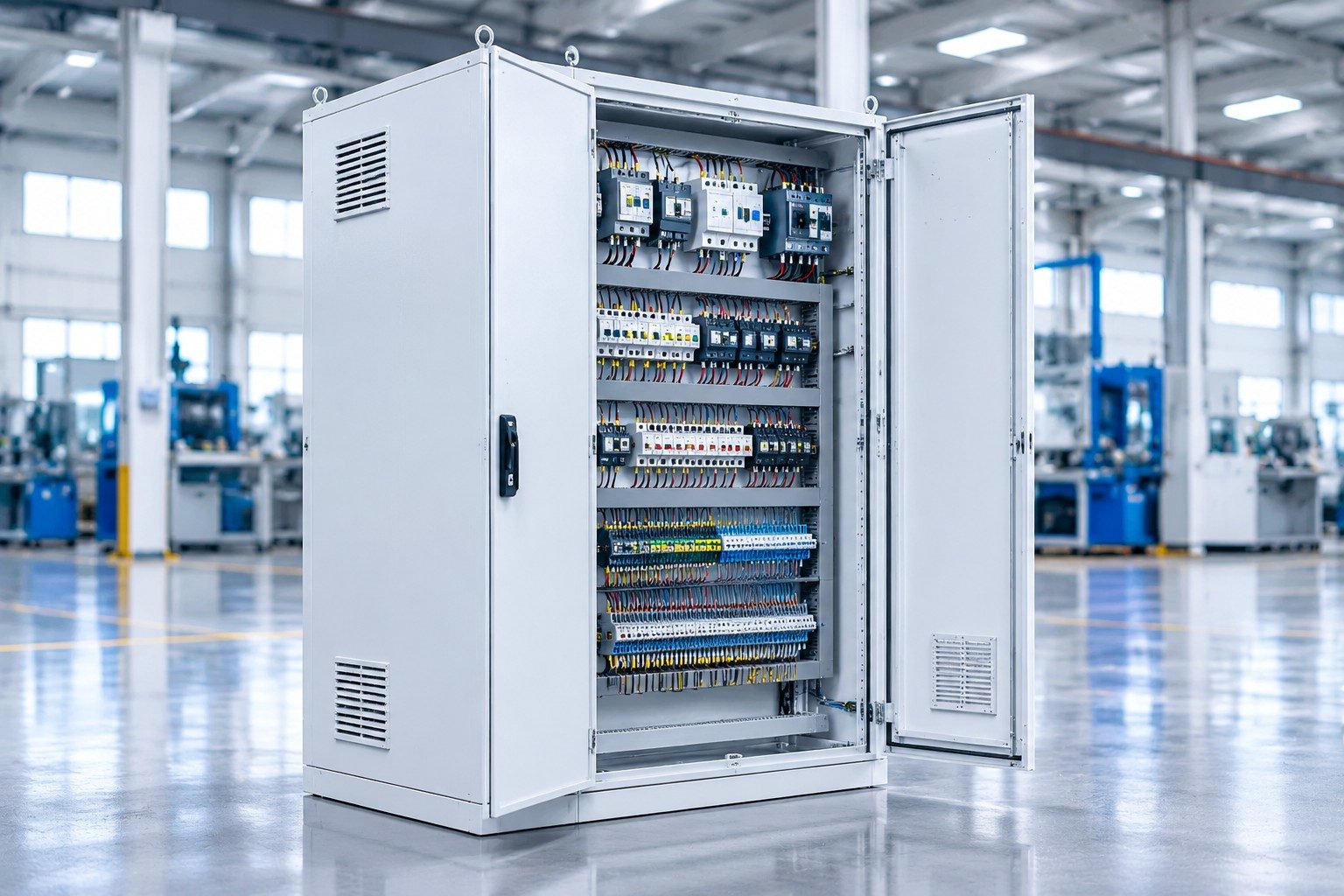
Cabinet wiring and internal mounting
Assembly
The plant does not stop at a coated box. Cabinets are wired and machines are assembled against a work instruction.
Assembly bays handle whole-machine wiring, hardware fitting and module installation for equipment builds. The customer's electrical and control content is integrated to the agreed drawing; we do not claim in-house development of control software or payment systems.
- Whole-machine wiring and assembly bays
- Build against customer drawing
- Electrical content integrated per project
- Inspection before packing
Value to your part. A unit that arrives wired and fitted, so your line receives a machine rather than a box of parts.
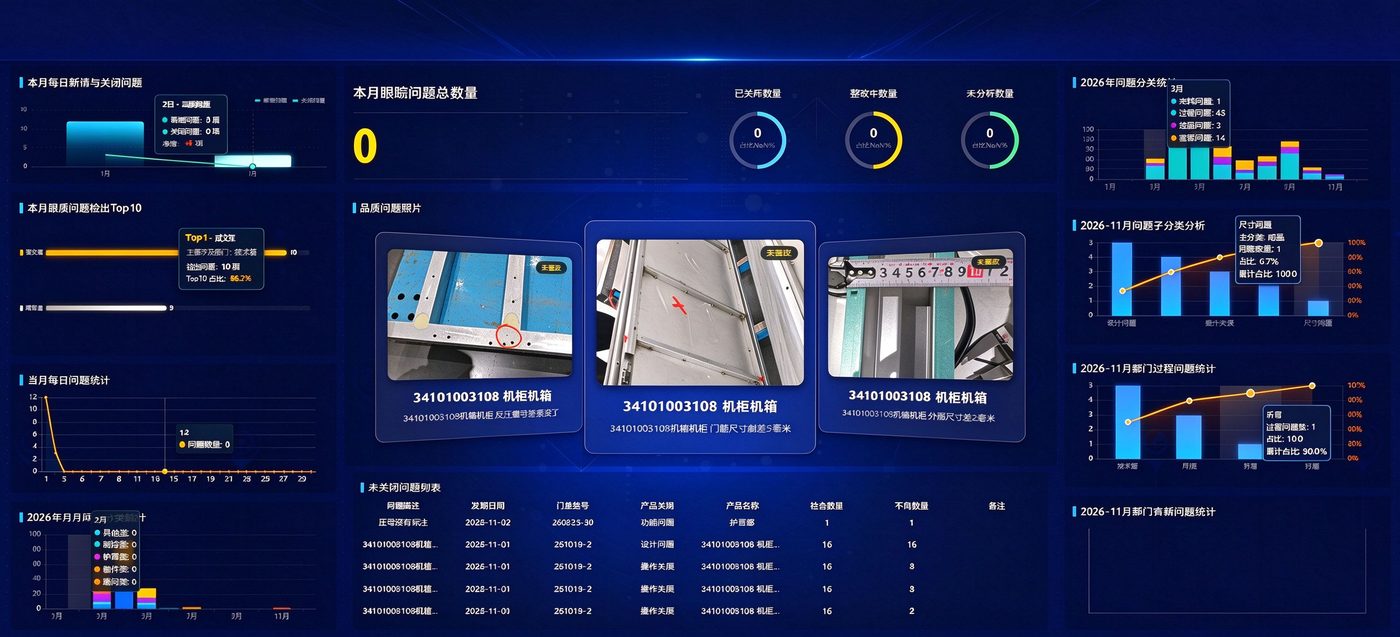
Inspection results recorded against the order
Quality Inspection
Every order leaves with a record, not just a promise.
Eight dispatch checks cover salt spray, colour, gloss, hardness, coating thickness, adhesion, riveting torque and earth resistance, using the instruments listed on the capabilities page. Results are recorded against the order and kept for traceability.
- 8 dispatch checks per order
- 14 inspection instruments
- Results recorded against the order
- Traceable to material batch
Value to your part. Evidence for your incoming inspection: eight checks and a record against the order number.

Dispatch access at the Qingxian plant
Packing & Delivery
A finished part is not finished until it arrives undamaged.
Parts are protected, labelled and packed to the method agreed at quotation. The packing list, quantity, labels and dispatch documents are checked before the consignment is closed. Customer-specific packing instructions and packing photos can be added to the quality record when required.
- Protection and edge/corner packing
- Labels and packing list checked
- Quantity and documents matched
- Dispatch from the Qingxian plant
Value to your part. A consignment that arrives with the quantity, labelling and protection stated on the order.
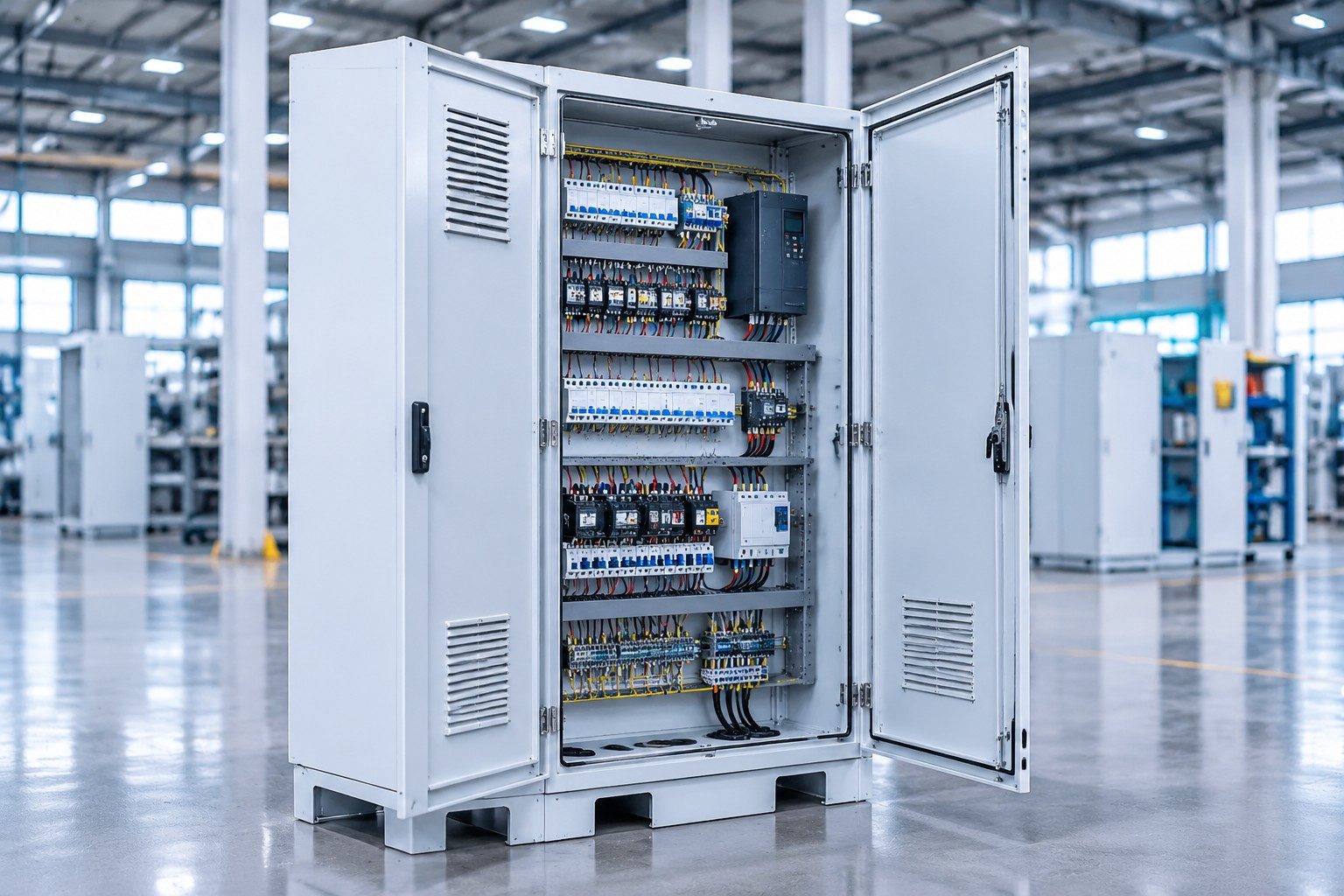
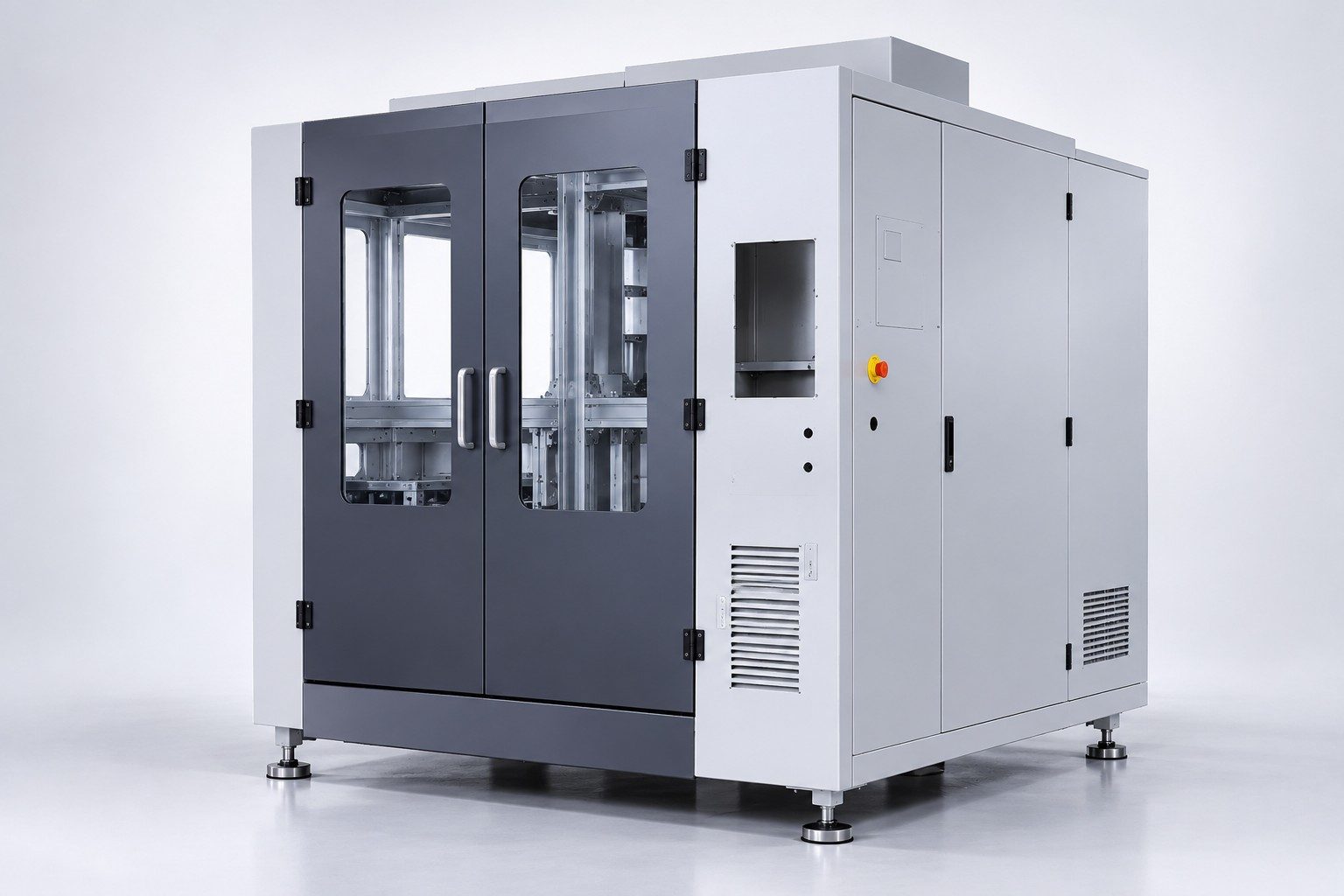
Cabinets and machine enclosures from the same route
The same twelve steps produce a control cabinet or a machine guard. The difference is the drawing, the inspection plan and the finish.
Production detail behind the parts
For buyers who need a part rather than a machine: laser-cut blanks, formed covers, riveted brackets and welded sub-assemblies, coated and inspected.